





















 Cloud Login

Smart mobility integrates vehicles, infrastructure, and users through real-time data to deliver safer, more predictable, and more efficient transportation. It replaces isolated systems with a continuous operational loop: devices collect conditions at the edge, backend systems evaluate those conditions, decisions are executed through connected operations, and performance feedback informs planning. As transport networks grow in complexity and demand increases, this loop turns raw telemetry into stable schedules, reliable routing, and measurable efficiency gains without increasing operational burden for drivers or dispatch teams.
The objective is operational reliability at scale. Fleets require consistent routing, controlled driving behavior, and predictable maintenance. Municipalities need throughput, safety, and transparent reporting. Mobility operators seek utilization, uptime, and stable rider experience. Achieving these outcomes starts with accurate signal acquisition, secured communication paths, and data models that convert raw measurements into actionable alerts, reports, and APIs. The sections below outline the foundational components, supporting technologies, key use cases, KPIs, deployment patterns, and how AutoPi contributes to these architectures.
What is Smart Mobility?
Smart Mobility is the integration of diverse transportation modes with advanced technologies to produce efficient and sustainable mobility systems. It applies technology to simplify urban movement and reduce environmental impact.
It is built on the interaction between multiple transport modalities and modern technologies such as sensor networks, advanced data analytics, artificial intelligence, and telematics. This layered ecosystem forms the technological foundation used in modern cities to design optimized and resilient mobility infrastructure.
Smart mobility extends beyond traffic optimization. It redesigns the broader transport system using continuous data acquisition. Cities apply these insights to analyze mobility patterns and optimize routes. Sensors and AI enable dynamic responses to environmental conditions and provide improved safety, precision, and system-level efficiency.
Telematics enables real-time interaction between vehicles and infrastructure, supporting dynamic traffic management and generating structured insights on vehicle performance and driver behavior.
Smart mobility also plays an essential role in reducing carbon emissions. It accelerates EV adoption, supports shared mobility, and reduces reliance on internal combustion vehicles.
As urbanization increases, Smart Mobility will remain a key enabler of efficient, responsive, and sustainable transportation. It is not only about movement between destinations-it contributes directly to shaping the long-term livability of cities.
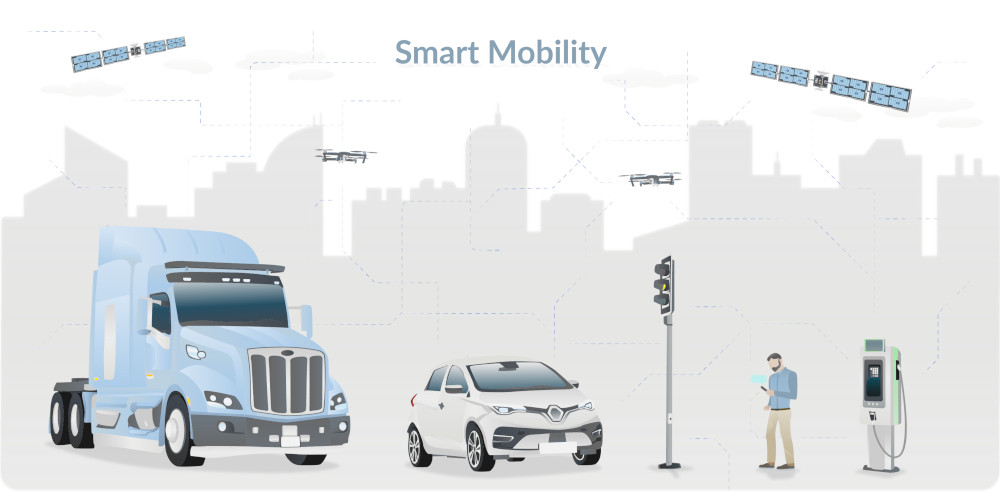
How Smart Mobility Works
Smart Mobility applies connected technologies and structured data to build transportation systems that are efficient, sustainable, and predictable.
-
Integration of Modes: Connects public transit, micro-mobility, and road transport into a unified network.
-
Data Utilization: Aggregates data from infrastructure, sensors, vehicles, and users to model travel patterns and system behavior.
-
Real-Time Adjustments: Applies real-time feeds to optimize signal timing, adapt public transport routing, and manage congestion.
-
Technology-Driven: Uses AI, IoT, and algorithmic optimization to increase safety and improve asset performance.
-
User-Centric Platforms: Provides integrated planning and payment systems across transport modes.
-
Sustainability Focus: Supports EV adoption, non-motorized travel, and emissions-reduction initiatives.
Examples of applied smart mobility systems:
-
Traffic Management: Uses real-time telemetry and algorithmic control to optimize signal timing and reduce congestion.
-
Public Transport Optimization: Uses real-time operations data to improve service reliability.
-
EV Integration: Incorporates charging infrastructure into planning to support emissions reduction.
-
MaaS Platforms: Consolidates transport options such as bikes, car-sharing, and transit into a single interface.
Additional applications:
-
Pedestrian and Cyclist Infrastructure: Develops protected, sensor-enhanced walking and cycling routes.
-
Smart Parking: Uses sensors and guidance systems to minimize search time and reduce idle emissions.
-
Integrated Payments: Consolidates fare payment into unified digital systems.
-
Data-Driven Planning: Uses mobility analytics to guide infrastructure and policy decisions.
Smart mobility evolves transportation into a coordinated, data-driven ecosystem that supports long-term sustainability and operational resilience.
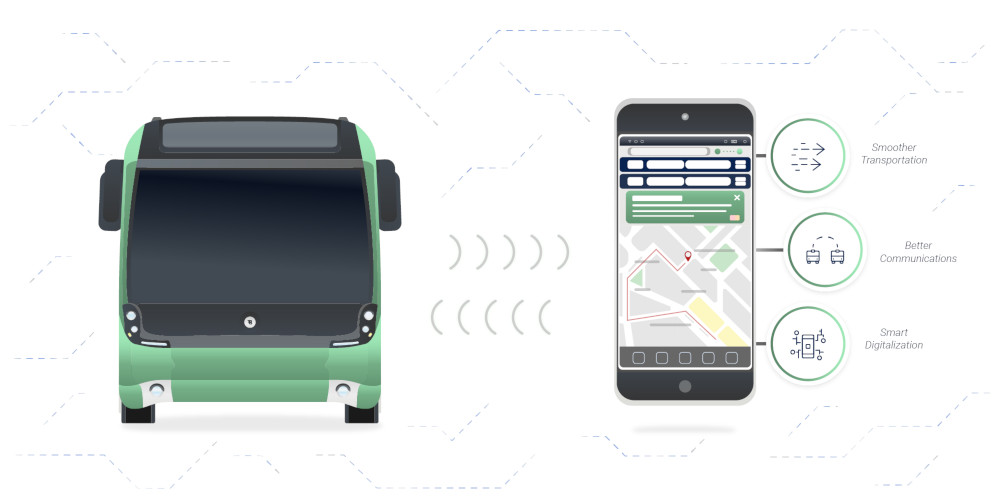
Why Smart Mobility Technology Is Essential
Smart mobility is a central component of modern urban systems. It contributes to emissions reduction, reduces congestion, and supports the transition to intelligent vehicle ecosystems.
It provides operational advantages for commuters, fleets, and city agencies by enabling real-time analysis and adaptive management. As connected vehicles scale, the smart mobility sector will continue to expand, strengthening the technology stack and creating new capabilities and job opportunities.
Smart mobility is not a generic solution. It is adaptive and configured to the specific characteristics of each urban environment. Road networks become part of a distributed sensing and decision system where connected vehicles and infrastructure optimize movement continuously.

Real-Life Examples of Smart Mobility Solutions
Global deployments show how smart mobility provides measurable improvements in efficiency, sustainability, and service quality.
Smart Biking in Copenhagen, Denmark
Copenhagen has implemented intelligent bike-priority traffic signals to reduce travel time for cyclists. This supports the city’s carbon-neutrality strategy and increases cycling adoption.
Autonomous Buses in Singapore
Singapore is testing autonomous buses equipped with cameras and sensors. These vehicles improve route precision, reduce congestion, and shorten wait times.
EV Charging Networks in Oslo, Norway
Oslo operates a fully monitored EV charging network, using real-time management to optimize station availability and energy distribution. This infrastructure underpins its rapid EV adoption and emissions reductions.
Integrated Mobility App in Vienna, Austria
Vienna’s unified mobility app consolidates public transport, taxis, bike rentals, and car-sharing into one interface. This reduces dependency on private vehicles and lowers traffic volume.
Traffic Management in Los Angeles, USA
Los Angeles applies adaptive traffic signal control to match real-time traffic density. The system has reduced delays and vehicle emissions while improving network throughput.
These examples demonstrate that smart mobility delivers repeatable benefits across geographies and infrastructure models. They show how data-driven transport systems improve sustainability, efficiency, and user experience.
Where AutoPi Fits
AutoPi provides CAN and CAN FD-capable telematics hardware and a cloud platform designed for reliable edge data capture, secured transmission, and normalized data models. Organizations can begin with geofencing, utilization, or maintenance workflows and expand into advanced telematics, diagnostics, or mobility operations through APIs and webhooks. The same hardware supports multiple deployment phases without requiring device replacement.
Conclusion
Smart Mobility represents the next phase of transportation evolution. It combines sensor intelligence, data-driven decision systems, and sustainable operational models.
By merging advanced technologies with physical infrastructure, Smart Mobility establishes a long-term foundation for efficient, resilient, and environmentally aligned transport systems.


