


















 Cloud Login

// fleet data
AutoPi Mini
Verify supported EV/OBD vehicles and parameters for standard fleet data.
Explore MiniBuild fleet integrations on vehicle data you have validated. Start with AutoPi Mini compatibility for supported EV and OBD parameters, CAN-FD Pro for J1939, CAN FD and data logging, or TMU CM4 for Docker and custom edge software.
The platform aggregates live data streams, normalizes events, and stores historical records for maintenance planning, asset protection, and operational analysis. Built in tools support geofencing, trip segmentation, alerts, and automated reports, while buffering, retry logic, and TLS encryption maintain data integrity when vehicles operate in noisy or low coverage environments.
Purchase PoC devices for representative vehicles. AutoPi then helps extract the required data, including reverse engineering where needed. Agree the signals, integration scope and acceptance criteria, then validate the data before expanding to the rest of the fleet.
Discuss a fleet PoCAutoPi unifies telematics, diagnostics, and operational data into one coherent system. Trip segmentation, geofence enforcement, and real time status and fault events are generated directly from devices, which enables predictable fleet oversight and data driven operational control across mixed ICE and EV fleets.

Configure trip detection using available GNSS, ignition and motion data, and validate it on representative vehicles. Geofences support entry, exit and dwell-time monitoring. These are monitoring inputs, not an automatic route-planning engine. For Docker workloads and custom processing on the device, choose TMU CM4 and agree the application and integration requirements.
All telemetry is normalized and transmitted to a dedicated cloud environment using TLS secured channels and device certificates. Buffered uploads ensure no loss of CAN or OBD, GPS, or fault data when coverage is poor. Historical records, event logs, and configuration changes are stored with timestamps and device identity so that audits, investigations, and long term operational analysis can be performed on accurate and traceable data.
The Fleet and Device Overviews surface real time operational health, including online status, sensor values, active fault codes, last seen location, and recent trip activity. Maintenance workflows benefit from direct access to trouble code alerts, mileage counters, and high resolution vehicle data that is already grouped by vehicle, asset type, and time period. Geofencing insights provide load zone monitoring, route optimization input, and security signals such as out of hours operation or movement outside configured regions.
With Device Alerts, OTA software updates, Global Variables, User and Role controls, and a built in Web Terminal for secure remote commands, AutoPi forms an extensible operational environment. Teams can integrate OBD libraries, templates, and custom data endpoints to align the system with existing workflows so that the collected data is used to improve uptime, safety, and decision making across the entire fleet.
AutoPi delivers the core telematics functions required for modern fleet operations, such as real time visibility, cost control, and predictive maintenance, built on high resolution data from vehicle networks and GNSS. These features integrate directly with AutoPi Cloud or your own systems through documented APIs and streaming interfaces.

Combine GNSS, motion data, and ignition state to track asset movement with high temporal resolution. Receive geofence entry and exit events, unauthorized use alerts, and route deviation signals in real time. Precise positioning together with configurable event rules supports safer operation, better dispatching, and effective theft prevention across the fleet.

Leverage CAN and OBD data, fuel flow, engine load, RPM, EV battery metrics, and idle patterns to identify waste and optimize driving behavior. Combine trip segmentation with utilization metrics to reduce unnecessary engine hours, improve routing, and lower total energy consumption for both ICE and EV fleets.

Monitor vehicle health through fault codes, temperature data, battery state, and usage patterns. Automated alerts surface emerging issues, while historical logs support service scheduling and root cause analysis. Use these insights to reduce unplanned downtime and maintenance cost and to document the history of critical components over their lifetime.
AutoPi provides an integrated hardware and software stack for fleet operators who need real time visibility, operational consistency, and predictable vehicle performance. Capture high resolution data at the vehicle, manage devices centrally, and feed fleet metrics directly into existing planning and maintenance systems.

The AutoPi Mini is the starting point for supported EV and OBD fleet parameters. Check make, model, year, available signals and regional connectivity before ordering. For J1939, CAN FD or vehicle-bus data logging, evaluate CAN-FD Pro. For Docker and custom edge software, evaluate TMU CM4.
Check AutoPi Mini compatibility
AutoPi Cloud consolidates telemetry, diagnostics, and operational data from every connected vehicle. Use built in dashboards for fleet overview, trip logs, alerts, and maintenance signals, or integrate the same data streams through REST, MQTT, and webhooks into ERP, dispatch, or maintenance platforms. With OTA updates, parser management, user roles, and device health monitoring, AutoPi Cloud delivers predictable and scalable control over fleets of any size.
AutoPi CloudAutoPi delivers the flexibility engineering teams need to build reliable, data driven fleet solutions. Hardware provides transparent access to vehicle networks, and the cloud platform manages device health, updates, configuration, and telemetry at scale. Whether you focus on improving fleet efficiency, developing custom applications, or integrating with existing enterprise systems, AutoPi offers a stable foundation that reduces integration complexity and shortens deployment cycles. From prototyping to full scale rollout, the platform supports your ability to turn fleet data into actionable and verifiable operational insight.

// your proof of concept
Let's find the right hardware for your vehicles, validate the data you need and plan the integration together.
// fleet data
Verify supported EV/OBD vehicles and parameters for standard fleet data.
Explore Mini// vehicle-bus logging
Evaluate J1939, CAN FD and vehicle-bus data logging.
Explore CAN-FD Pro// custom edge software
Develop Docker workloads and custom edge software.
Explore TMU CM4Confirm vehicle power, connectors, adapters and any required external sensors. An accessible connector does not guarantee that every requested signal is available.
Compare device capabilities// project scope
// from testing to rollout
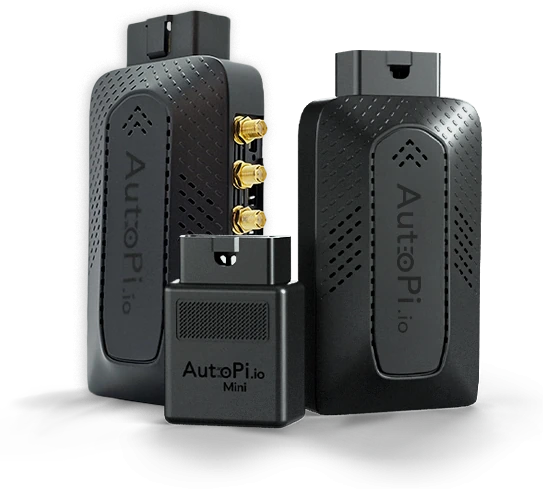
We'll help you choose devices to purchase for representative vehicles, then work with you to extract the data you need, including reverse engineering where needed. Together, we'll agree the scope and acceptance criteria, validate the captured signals and integration, then decide on rollout.
Discuss your PoCGet in touch with us - we're ready to answer any and all questions.