























 Cloud Login
Hardware UPGRADED
Our 2nd-Generation
AutoPi Telematics Unit CM4
A Linux-based edge compute platform engineered for OEM integration, heavy machinery and demanding field deployments. Two independent CAN-FD channels via SocketCAN, native SAE J1939 support, Docker-ready workloads and 4G/LTE Cat 4 connectivity - all remotely manageable through AutoPi Cloud and Tailscale.
BCM2711 quad-core Cortex-A72 @ 1.5GHz · standard 1 GB LPDDR4 · 8 GB eMMC
2× CAN-FD · SocketCAN · SAE J1939 native · OBD-II · DoIP ready via HAT
Docker · Python · NXP SE051 security · Tailscale · OEM factory-fit or aftermarket
In stock | Order now! Ships tomorrow.


OEM & Industrial Grade
Linux edge compute platform for OEM integration, heavy machinery and fleet deployments
The AutoPi TMU CM4 runs full Linux on a BCM2711 quad-core Cortex-A72 @ 1.5GHz compute module with up to 8 GB LPDDR4 and 32 GB eMMC. Two independent CAN-FD channels via SocketCAN, native SAE J1939 support for heavy machinery, Gigabit Ethernet, and an NXP SE051 hardware security element - packaged for OEM factory integration, rugged field deployments and demanding industrial applications.
2× CAN-FD via SocketCAN - SAE J1939 and OBD-II native, DoIP ready via HAT
NXP SE051 hardware security element - protected key material and device identity
OEM factory-fit or aftermarket - 9/12-pin J1939 harness adapters for Cummins, Caterpillar, Komatsu
AutoPi TMU CM4 platform
Hardware features
engineered into the CM4 generation
AutoPi hardware is designed as a compact, vehicle-grade IoT unit that centralizes data from installed assets and vehicle networks. The goal is predictable integrations: CAN, OBD-II and IP connectivity in one device, plus a Linux environment that supports custom services and edge workloads.
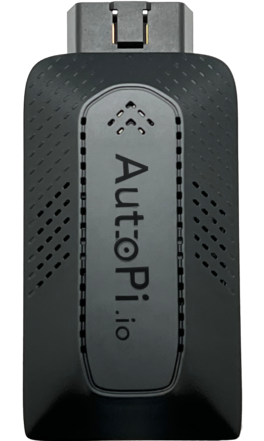
Extendable
Extend the AutoPi TMU CM4 to compatible vehicles and machinery
Extension and adapter cables simplify installation across vehicle types. Heavy-duty adapters cover common SAE J1939 connectors used in trucks and industrial equipment. The standard adapter range includes OBD-II extensions, power cables, splitters, and vehicle-specific harnesses. Combined, these accessories support repeatable installation, stable data access, and compatibility across light-duty and heavy-duty systems.
See all adaptersFemale CAN Bus cable with open wires

OBD-II to dual DB9 adapter

Cummins-Komatsu Truck 12 PIN J1939 to 16 PIN OBD-II Adapter

Cummins 9 PIN J1939 (J1708) to 16 PIN OBD-II Adapter Cable

Caterpillar (538-5051) Truck 9 PIN J1939 to 16 PIN OBD-II Adapter

Platform highlights
Everything you need, engineered in
One device. Full Linux. Dual CAN-FD. Global connectivity. OEM-ready from factory floor to field.

Technical Specifications
AutoPi Cloud is included with your TMU CM4, with or without a subscription. Hardware starts at €235 with the subscription option. Choose the CAN 2.0/CAN-FD variant and payment option that suit your project. The subscription option costs €6/month for 12 months and includes an AutoPi SIM with 100 MB/month.
Explore configuration options and current pricing in the shop. Starting prices exclude taxes, shipping and accessories.
The CAN-FD variant provides two SocketCAN channels with up to 5 Mbps data-phase rates. The CAN 2.0 variant does not support CAN-FD. Configure J1939 PGN/SPN or OBD-II collection for your vehicle and adapter; DoIP requires compatible HAT expansion. Capture rate depends on configuration; see the datasheet.
Full Raspberry Pi OS with Docker and Python. Run containers alongside SocketCAN (candump, cansend, DBC) without compromises.
Global modem coverage in one SKU. GPS/GLONASS/BeiDou/Galileo with A-GPS and real-time clock for timestamp integrity across power cycles.
Direct harness wiring for production-line integration or plug-in OBD-II for compatible retrofits. Request the applicable device compliance documentation; vehicle-level type approval requires assessment of the complete installation.
Controlled shutdown on ignition-off prevents data corruption. Configurable voltage thresholds protect the auxiliary battery in always-on fleet deployments.
Hardware key storage for device identity. Zero-trust SSH via Tailscale VPN. OTA firmware and config updates pushed from AutoPi Cloud - no field visits required.
Pin header (1.27mm) for HAT designs. Dual USB, Gigabit Ethernet, BT 5.0 + BLE and a programmable button for custom installation and sensor workflows.
AutoPi Core source is available on GitHub. Build and review custom handlers, triggers, filters and returners. Source access supports technical review; it does not establish regulatory certification.
Broadcom BCM2711 quad-core Cortex-A72 @ 1.5GHz. Variants: 1, 2, 4 or 8 GB LPDDR4 · 8–32 GB eMMC. Compute headroom for on-device analytics and multi-service deployments.
Embedded IMU measures acceleration and rotational motion. Useful for harsh-event detection, vibration analysis, roll/pitch monitoring and motion-aware automation on heavy machinery.
Dual-band WiFi (2.4/5 GHz) for local AP access and staging. Bluetooth 5.0 + BLE support for wireless peripherals, beacons and short-range sensor integration in constrained install environments.
Real-world installations
Deployed in the field
From passenger vehicles to heavy-duty fleets - the AutoPi TMU CM4 integrates directly into the vehicle architecture without modifying existing systems.


Expandable platform
Built to extend
The CM4 generation consolidates earlier shield concepts into a unified expansion architecture. A cleaner mechanical stack, fewer moving parts, and a Pin GPIO header that supports custom HAT designs - the same base unit adapts across vehicle programs without hardware changes.

Connectivity at the back panel
- 2× USB ports for peripherals, storage, cameras or expanders
- Gigabit Ethernet for local network integration and LAN fallback
- OBD-II connector - plug-and-play access to vehicle diagnostics bus

Field access without disassembly
- SIM card slot - hot-swappable nano-SIM for cellular provisioning in the field
- Micro-USB for flashing and console access during setup or recovery
- Mini-HDMI output for display connection in HMI prototypes and test rigs
Pin GPIO header
1.27mm pitch · HAT expansion · custom I/O
BT 5.0 + BLE
wireless peripherals · sensors · beacons
DoIP via HAT
Ethernet-based diagnostics on the same unit
Mini PCI-E socket
modem expansion · additional radio modules
CM4 variants
More compute, more memory options
All variants share the same BCM2711 quad-core Cortex-A72 @ 1.5GHz platform and identical I/O. RAM and eMMC storage are specified at order time to match the target workload and deployment environment.
1 GB
LPDDR4
8 GB eMMC
OBD-II · basic telematics
2 GB
LPDDR4
16 GB eMMC
Fleet telematics · Docker
4 GB
LPDDR4
32 GB eMMC
Edge compute · J1939 · OEM
8 GB
LPDDR4
32 GB eMMC
ML inference · multi-service

Raspberry Pi Compute Module 4 - the compute heart of the TMU CM4. All variants run identical software and support the full AutoPi platform.
Integrated hardware blocks
Hardware components inside the TMU CM4
Every component is integrated and validated as a system. The result is predictable behavior across vehicle programs and operating conditions.
Raspberry Pi Compute Module 4
BCM2711 quad-core Cortex-A72 @ 1.5GHz with 1–8 GB LPDDR4 and 8–32 GB eMMC. Full Linux platform for data collection, connectivity, and on-device services.
CAN bus and OBD chipset
Select CAN 2.0 or CAN-FD interfaces. The CAN-FD variant provides two SocketCAN channels with up to 5 Mbps data-phase rates. Configure SAE J1939 PGN/SPN decoding, OBD-II PID polling and DBC decoding for your network. DoIP requires compatible HAT expansion.
NXP SE051 security element
Hardware-backed key storage for device identity and protected credentials. Reduces operational risk across multi-service deployments. Required for regulated OEM certification workflows.
4G modem and WiFi
4G/LTE Cat 4 via Mini PCI-Express socket. Dual-band WiFi 802.11 b/g/n/ac (2.4/5 GHz) for local AP access and LAN fallback. Global band coverage in one SKU.
GNSS module and real-time clock
GPS / GLONASS / BeiDou / Galileo with A-GPS. Real-time clock maintains timestamp accuracy during power cycles and intermittent coverage - critical for log integrity.
Accelerometer and gyroscope
Embedded IMU measures acceleration and rotational motion. Used for harsh-event detection, vibration analysis, roll/pitch monitoring, and motion-aware automation on heavy machinery.
Bluetooth 5.0 + BLE
Bluetooth 5.0 with BLE for wireless peripherals, sensors, and beacons. Common in retrofit projects where wiring is constrained or short-range sensor integration is needed.
GPIO header
Pin header at 1.27mm pitch for in-case HAT designs. Supports additional I/O, sensors, and project-specific interfaces without modifying the base unit.
USB ports and HDMI
Dual USB for peripherals, storage, or cameras. Mini-HDMI for direct display connection in test rigs or in-vehicle HMI prototypes. USB expandable via hub within power budget.
Smart Power Manager
Controlled shutdown on ignition-off prevents data corruption. Configurable voltage thresholds protect the auxiliary battery. Supports 9–35 V DC for light-duty and heavy-duty supply rails.
Button I/O input
Programmable button for service triggers, on-device state toggles, or installation workflows. Useful for field provisioning and in-vehicle interaction without a display.
Voice speaker
Onboard speaker for audio notifications triggered by device state, GNSS position, motion signals, or vehicle data events. Enables in-cabin alerts without additional hardware.
Deployment Scenarios
Built for where it matters
From construction sites and agricultural machinery to OEM factory integration and prototype R&D fleets - the TMU CM4 is engineered for demanding, real-world deployments.
OEM Factory Integration
Integrate via direct harness wiring, with fleet provisioning and OTA configuration management through AutoPi Cloud. Confirm wiring, power requirements and applicable compliance documentation for the complete installation.
SAE J1939 Heavy Machinery
Monitor construction equipment, agricultural machinery and mining vehicles. Reads PGN/SPN data directly over the J1939 backbone - no additional gateway needed. Adapters available for Cummins, Caterpillar and Komatsu connectors.
Dual-Bus R&D & Prototype
With the CAN-FD variant, configure logging on two networks, such as powertrain and body buses in a prototype EV or hybrid. Decode with suitable DBC definitions and export for engineering analysis. Validate capture rate, bus access and storage against your test requirements.
Fleet Telematics & GPS
Real-time GPS/GNSS tracking, geofencing and vehicle health telemetry uploaded to AutoPi Cloud over 4G/LTE Cat 4. Supports 188 countries with the AutoPi Global SIM. Multi-tenant cloud supports isolated fleets with role-based access control.
Edge Compute Workloads
Run Docker containers, Python microservices or ML inference models directly on the vehicle. Process and filter data at the edge before upload - reducing cloud costs and enabling offline operation. Pin GPIO header and USB ports for additional sensors and I/O.
Secure Remote Diagnostics
SSH directly into any deployed unit via Tailscale VPN - no open firewall ports required. Push OTA firmware and configuration updates from AutoPi Cloud. NXP SE051 hardware security element protects device identity and credentials across the entire fleet.
Frequently asked questions
The AutoPi TMU CM4 is a smart telematics device built on the Raspberry Pi Compute Module 4 and the AutoPi board. Here are its main features:
Processor: Powered by a Broadcom BCM2711 Quad-core Cortex-A72 @ 1.5GHz for fast performance.
Momory: Starts with 1GB LPDDR4, but you can upgrade to 2GB, 4GB, or 8GB.
Storage: Comes with 8GB eMMC storage, upgradeable to 16GB or 32GB.
Modem: Has a 4G/LTE Cat 4 connection with global support.
GPS: Built-in GPS + A-GPS, compatible with GPS/GLONASS/BeiDou/Galileo/QZSS.
Power: Works with 12.5V car batteries and up to 35V for trucks, with a system to prevent battery drain.
Wireless: Includes WiFi (2.4GHz/5GHz) and Bluetooth 5.0 + BLE.
Security: Features hardware-based secure key management.
For all the technical details, check out the tmu cm4 datasheet. Want to know more about the device? Take a look at our autopi device guide.
The AutoPi TMU CM4 is perfect for fleet managers, car rental companies and tech enthusiasts who want to improve vehicle monitoring and management.
Installation is quite straightforward. It connects to your vehicle's OBD-II port, and detailed instructions are included. No special tools are required, but if you're unsure, a professional can guide you through the installation with you. We have an installation guide that you might find useful.
Compatibility depends on the vehicle, model year, ECU access, wiring and selected CAN 2.0/CAN-FD variant. An OBD-II connector alone does not guarantee access to the signals you need. Validate on a representative vehicle and consult our support team for configuration guidance.
The AutoPi TMU CM4 is packed with features like advanced vehicle telematics, real-time GPS tracking, remote diagnostics, and customizable alerts. It supports over-the-air updates and integrates smoothly with various software platforms.
TMU CM4 starts at €235 and is available with or without subscription. Price depends on CAN 2.0/CAN-FD variant and payment selection. The AutoPi SIM and Cloud subscription option costs €6/month with a 12-month commitment and 100 MB/month. Starting prices exclude taxes, shipping and accessories. Confirm the selected configuration on the product page.
Order through our webshop from €235, with or without subscription. Price varies by CAN 2.0/CAN-FD variant and payment selection; the subscription option is €6/month for 12 months with 100 MB/month. Taxes, shipping and accessories are excluded. For invoice orders or project requirements, contact sales.
Still have questions?
Get in touch with us - we're ready to answer any and all questions.