























 Cloud Login

The Tesla logo is not only a stylized letter T.
It is connected to the structure of an electric motor, which is also the technical foundation behind Tesla as a car company.
This article explains what the Tesla logo means, where the shape comes from, and why the design is connected to the rotor and stator inside an electric motor.
We also look at how this fits with Tesla vehicles, EV branding, and how vehicle data from electric cars can be used in practical projects with AutoPi.
A logo in the automotive and EV sector needs to work in many places. It can be shown on a vehicle, in a mobile app, on a dashboard, in a charging interface, or inside the car software.
For EV manufacturers, the logo often carries more than brand identity. It is also linked to batteries, electric motors, charging, software and the general architecture of the vehicle.
Tesla’s logo is one of the few car logos where the technical meaning is directly connected to the drivetrain.
The True Meaning of the Tesla Logo
The Tesla logo represents a cross-section of an electric motor.
This fits the company history, because Tesla was built around battery-electric drivetrains from the start. The early Tesla Roadster and later Model S were not combustion vehicles with an electric system added afterwards.
They were designed around electric propulsion as the main architecture.
The shape of the T points to two important parts in an electric motor: the rotor and the stator.
The rotor is the part that rotates. The stator is the fixed part around it that helps generate the magnetic field.
This is where the logo connects to engineering in a very direct way.
The logo looks simple when you first see it, but the structure makes more sense when it is compared with an electric motor cross-section.
These kind of cross-sections are normal in motor design, EV development and engineering documentation.
RO Studio developed the original Tesla logo. In the first version, the T was placed inside a shield.
The shield made it look more like a traditional automotive badge. Later, Tesla removed the shield and used the T by itself.
This made the logo more useful in digital interfaces, vehicle screens, mobile apps, animations and other places where a clean symbol works better.

According to Elon Musk, the stylized T shows one of the rotor poles with part of the stator around it.
If the same shape is repeated in a circular pattern, it starts to look like the geometry of an electric motor.
This makes the logo more than just a letter. It is also a small reference to the electric machine that drives the vehicle.

The vertical part of the T can be understood as a rotor pole.
The curved line at the top can be seen as part of the stator around it.
When the rotor and stator interact through a controlled magnetic field, the motor produces torque and drives the wheels of the EV.
This is the main technical idea behind the logo.
Tesla has used different motor types over time, including AC induction motors in early vehicles and permanent magnet motor designs in newer platforms.
But the basic principle is still the same: the vehicle is driven by electric machines, not combustion engines.
How an Electric Motor Works
The logo becomes easier to understand when you know the basic parts of an electric motor.
In a typical AC induction motor, three parts are important:
- Rotor: The rotating part inside the motor that is connected to the output shaft.
- Stator: The fixed part around the rotor with windings that create the magnetic field.
- Electromagnetic field: The controlled current and voltage pattern that creates torque.
When the stator creates a rotating magnetic field, the rotor follows.
In an induction motor, the interaction is created through induced currents in the rotor.
In a permanent magnet motor, magnets are placed in or on the rotor.
The principle is different in detail, but the basic motor geometry is still built around the rotor and stator.
This relationship is what the Tesla logo points to.
It is unusual because many car logos are based on heritage, animals, crests, initials or abstract symbols.
Tesla’s logo is instead connected to the actual system that moves the vehicle.
Why Tesla Chose a Motor Cross-Section
Tesla’s early identity was built around drivetrain engineering, battery systems, power electronics and software control.
The company needed a logo that matched a brand based on electric propulsion instead of combustion engines.
A logo based on a motor cross-section communicates a few clear ideas:
- Electric propulsion: The motor is central to Tesla’s vehicle design and brand identity.
- Engineering precision: The shape connects the brand to hardware architecture and technical design.
- Electrical systems: The logo points to physics, electronics and motor control instead of traditional engine design.
- New powertrain thinking: The logo reflects a shift from combustion platforms to electric vehicle platforms.
Many automotive logos focus on racing history, family names, geographic references or visual style.
Tesla’s logo is different because it refers directly to the mechanism that drives the car.
How Branding Works in the EV Industry
EV branding often needs to communicate more than a name.
It often points to energy systems, charging capability, efficiency, software and electronics.
Some EV brands use symbols related to clean energy, sustainability or futuristic design.
Tesla chose a more technical reference.
A motor cross-section stays relevant even if battery chemistry, cell formats and vehicle platforms change over time.
The vehicle may change. The software may change. But the idea of electric motor propulsion stays central to the brand.
Comparison With Other EV Brand Logos
Tesla’s engineering-inspired logo is different from many other EV logos.
- Nissan Leaf: Focuses more on eco-friendly associations and sustainability themes than motor design.
- Lucid Motors: Uses a typography-driven style connected to minimal design and aerodynamics.
- Rivian: Uses a compass-like emblem linked to adventure, off-road use and navigation.
- BYD: Uses a more traditional badge style based around the brand initials.
In this group, Tesla is one of the few brands where the logo points directly to a technical component.
For engineers and technical users, this is part of why the logo is easy to remember.
How AutoPi Interacts With Tesla Vehicles
For AutoPi, the connection between EV branding and engineering becomes practical.
AutoPi hardware can be used to read vehicle data, battery metrics and CAN-based messages from supported Tesla models when the setup is configured correctly.
In many projects, this can include:
- Battery data: State of charge and state of health values where these are available.
- Charging behaviour: Charging curves, power levels, consumption and temperature effects over time.
- Drivetrain data: Speed, torque demand and other drivetrain values where access is permitted.
- Diagnostics: Diagnostic trouble codes, fault flags and system alerts relevant for maintenance.
With remote access and cloud storage, AutoPi can help owners, integrators and fleet operators analyze trends and detect issues earlier.
Typical use cases include range analysis, charging strategy, depot planning and pre-emptive service.
This fits well with the logo’s motor reference. The same type of electric machine that the logo represents can also be monitored and logged through vehicle data when the project has access to the needed signals.
Tesla Models Timeline
Tesla’s product line has expanded over time.
Each model introduced new drivetrain layouts, battery pack changes, thermal management improvements and software updates.
The model history also matters when data logging and integration are considered, because different generations can expose different signals and behave differently.
Tesla Roadster (first generation), 2008
The first-generation Roadster marked the beginning of Tesla’s vehicle production.
It used a Lotus Elise-derived chassis and showed that lithium-ion battery packs could power a performance vehicle.
The Roadster also showed that range and acceleration could work together in one EV platform.
Tesla Model S, 2012
The Model S became Tesla’s flagship sedan.
It introduced long-range capability, a large underfloor battery architecture and software-driven vehicle management.
The large center touchscreen replaced many physical buttons and helped move the vehicle toward software-defined controls.
Tesla Model X, 2015
The Model X was built on the Model S platform and introduced a larger SUV format.
It included dual-motor all-wheel drive configurations, air suspension and falcon-wing doors with complex sensor-driven control.
Tesla Model 3, 2017
The Model 3 became Tesla’s mass-market vehicle.
It focused on efficiency, simplified production and lower cost compared with the earlier premium models.
The central touchscreen replaced most physical controls, which made the software interface even more central to the vehicle experience.
Tesla Semi, 2017
The Tesla Semi was developed for long-haul commercial use.
It uses multiple motors, heavy-duty thermal systems, regenerative braking and a large battery pack designed for demanding duty cycles.
Tesla Model Y, 2019
The Model Y shares many components with the Model 3.
It adds more storage, a higher seating position and SUV-style packaging. It also uses heat-pump technology to improve efficiency in colder conditions.
Tesla Cybertruck, 2022
The Cybertruck uses a stainless-steel exterior and a different body structure compared with conventional vehicles.
Its battery pack and drivetrain were designed for towing, durability and range.
An overview of supported models and integration options is available under: Tesla models compatible with AutoPi and the broader AutoPi hardware comparison overview.
Brief Facts About Tesla
Tesla is often mentioned as one of the companies that changed how the automotive industry thinks about electric vehicles.
Ford changed mass production for combustion vehicles in the early 20th century. Tesla pushed the industry toward electrification, software-driven vehicles and integrated energy systems.
Tesla grew from low-volume sports car production into large-scale EV manufacturing with multiple factories.
The company now works across vehicles, energy storage, charging infrastructure and software.
- Growth: Tesla expanded fast, but also faced many production and scaling challenges.
- Revenue: Revenue grew strongly from FY 2008 to FY 2020, with major growth in the later years.
- Deliveries: Quarterly deliveries from 2016 to 2021 showed consistent growth, passing 241,000 vehicles in Q3 2021.
- Operating margin: Operating margin improved between 2019 and 2021 as production scale increased.
- 2021 deliveries: Tesla delivered about 936,000 vehicles in 2021.
Facts About Tesla in 2022 and 2023
- 2022 production: Tesla manufactured and shipped more than 1.3 million EVs worldwide.
- Cumulative sales: Tesla reached close to 4 million cumulative EV sales by the end of 2022.
- US EV market: Tesla held a very large share of the US EV market in parts of this period.
- Q4 2022 revenue: Tesla reported about 17.71 billion dollars in revenue for Q4 2022.
- 2023 infrastructure: Tesla continued expanding charging infrastructure and the Supercharger network.
- Q3 2023 production: Tesla produced more than 430,000 vehicles in Q3 2023 according to public figures.
A Brief History of a Fortune 500 Company
Tesla was named after inventor Nikola Tesla and started in 2003.
Elon Musk joined in 2004 as an early investor and chairman, and later became CEO.
By 2017, Tesla had expanded into solar and energy storage after integrating SolarCity and rolling out Powerwall and Powerpack products.
Tesla became the global EV sales leader by 2019.
Today, the company produces vehicles, energy storage systems, charging infrastructure and software platforms that connect these products together.
- Model 3: Revised versions have been produced with updated interior components and changed range figures.
- Software: Over-the-air updates continue to change vehicle behaviour, energy management and driver-assistance features.
- Pricing: Price adjustments in 2023 helped Tesla compete as EV adoption increased in several regions.
- Cybertruck: Production progress and customer deliveries moved the vehicle from prototype toward normal production.
With expanded product lines and ongoing software improvements, Tesla keeps a strong position in the EV industry.
The logo, built around a motor cross-section, remains a compact symbol for the company’s mix of hardware, software and electrical engineering.
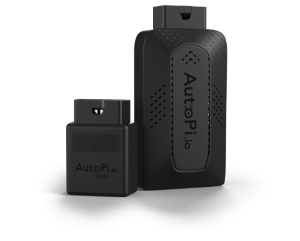
Read and reset fault codes on EVs with detailed telemetry
The AutoPi device is compatible with many electric brands


