





















 Cloud Login

Need a simple, practical intro to car sharing?
Car sharing is a mobility service where users can access vehicles when they need them, without owning the vehicle.
It is part of the wider smart mobility area.
The idea is simple.
A vehicle can be booked, unlocked, used and returned through an app or web platform.
The operator handles the vehicle, insurance, service, billing and access control.
For the user, it gives access to a car without the fixed cost of ownership.
For the operator, it turns parked vehicles into assets that can be used by many people during the day.
This article explains what car sharing is, how it works, which business models are used, which telematics and access control systems are needed, and where AutoPi fits in car sharing projects.
The Rise of Shared Mobility Economy
Car sharing is one part of the shared mobility economy.
It makes privately owned or professionally managed vehicles available to verified users on demand.
It takes some of the same ideas from the sharing economy.
Users get access when they need it, while the owner or operator gets more value from the asset.
In cities, this can reduce the need for a second private car.
It can also support public transport, cycling and other mobility options by covering trips where a car is still needed.
The model works best when the app, payments, vehicle access, insurance and field operations are connected in one reliable workflow.
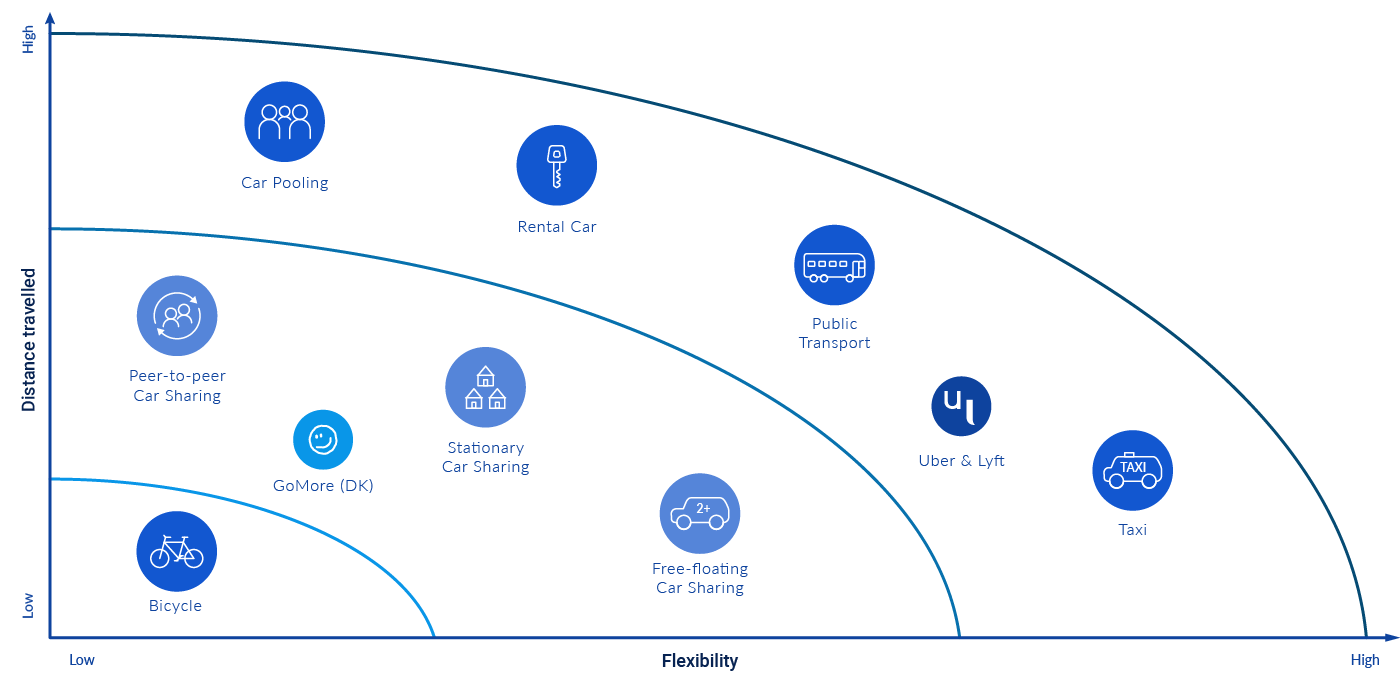
Operators such as Uber and Lyft have shown how app-based mobility can change how people move around.
Regional services such as GoMore in Denmark show how local partnerships, parking access and policy support can make shared vehicles more useful.
Car sharing does not fully replace traditional rental.
It extends the model with shorter bookings, unattended access, flexible pricing and better live vehicle data.
What is Car Sharing?
Car sharing is a service where people rent or share cars for short periods.
The booking is often made through a mobile app.
The user registers, verifies their identity and driving license, adds payment details and then books a vehicle.
Access is normally handled digitally.
The user unlocks the car with the app, a card, Bluetooth or another secure method.
The platform tracks the trip, calculates the cost and makes the vehicle available again after the trip is finished.
You can think of it as a library for cars.
You use the car when you need it, return it when you are done and the platform makes it ready for the next user.
The value is not only convenience.
Car sharing can reduce the number of privately owned vehicles, improve vehicle utilization and help cities manage parking demand.
When electric vehicles are included, it can also support lower-emission transport, as long as charging and operations are handled properly.
Business Models and Where Each Wins
Car sharing can be operated in different ways.
The right model depends on density, parking access, user behavior, charging needs and how much field service the operator can handle.
The most common models are free floating, round trip, corporate fleet sharing and peer-to-peer sharing.
| Model | How it works | Strengths | Operational watchouts |
|---|---|---|---|
| Free floating | Users pick up and drop off vehicles inside a geofenced operating zone. | High convenience in dense urban areas. | Needs rebalancing, parking control, cleaning and charging planning. |
| Round trip or station based | Users reserve a vehicle from a fixed bay and return it to the same bay. | Predictable availability and easier parking or charging control. | Less spontaneous and depends more on advance booking. |
| Corporate fleets | Employees share company vehicles for business trips or work-related use. | Improves utilization and can reduce reimbursements, taxis or rental cost. | Needs clear policy for access, damage, parking and after-hours use. |
| Peer to peer | Private owners list vehicles and the platform handles booking, access and insurance. | Asset-light growth and good suburban coverage. | Quality control, fraud prevention and insurance are more complex. |
How Does Car Sharing Work?
Car sharing works through a network of vehicles that users can find, reserve, unlock and drive.
The first step is registration.
The user verifies identity, driving license and payment method.
After approval, the user can open the app and see available vehicles nearby.
The app normally shows location, vehicle type, fuel level or battery state of charge, price and parking rules.
When the user reserves the vehicle, the platform sends the access permission to the vehicle.
The vehicle can then be unlocked by app, Bluetooth, NFC, card or another secure access method.
Telematics records the trip start, vehicle motion, odometer, location and trip end.
This data is used for billing, insurance, support and operations.
When the user ends the trip, the vehicle returns to the pool and becomes available for the next booking.
Core User and Operations Flows
A good car sharing service should feel simple for the user and predictable for the operator.
The main flows should be standardized.
This includes signup, booking, unlock, trip start, trip support, trip end, billing, cleaning, charging and damage handling.
- Signup: Check ID, driving license and payment method before the user is allowed to book.
- Search and booking: Show vehicle location, photos, fuel level or state of charge and zone rules.
- Secure unlock: Release the vehicle through app, Bluetooth, NFC or another approved access method.
- Trip support: Let users report incidents, parking issues, charging problems or damage with photos.
- Trip end: Validate location, odometer, lock status and billing data.
- Operations: Trigger cleaning, charging, rebalancing and damage workflows when needed.
Telematics and Access Control Stack
The device and cloud stack decide how reliable the car sharing service becomes.
The vehicle needs a telematics unit that can provide location, connectivity, vehicle status and access control.
For more advanced setups, the device may also read CAN or OBD data, control digital I/O for locks and immobilizer, and support Bluetooth or NFC for local access.
Cloud rules then handle geofences, exceptions, booking state, alerts, audit logs and integrations with the mobility app, payment system and KYC provider.
| Layer | Requirement | Notes |
|---|---|---|
| Device | GNSS, LTE, CAN or OBD, digital I/O for locks and immobilizer, BLE/NFC. | AutoPi TMU CM4 or CAN-FD Pro can support mixed ICE and EV fleets. |
| Edge logic | Offline buffering, tamper detection, trip start and trip stop logic. | Keeps access and trip recording more reliable when coverage is weak. |
| Cloud | APIs, webhooks, geofences, alerting and audit logs. | Connects the app, payments, KYC and fleet operations. |
| Security | Device identity, signed firmware and role-based access. | Protects vehicles, users and business data. |
Pricing Structures and Fees
Car sharing pricing should be easy for users to understand.
It also needs to guide demand and protect the operator from long-distance, damage, cleaning and charging costs.
Most operators combine time-based pricing with distance-based pricing and sometimes daily caps.
Deposits, cleaning fees, young-driver fees and zone surcharges should be shown before checkout to avoid disputes.
| Component | Typical value | Best use |
|---|---|---|
| Per minute or hour | $0.25–$0.45 per minute or $8–$15 per hour. | Short urban trips and errands. |
| Per km or mile | $0.20–$0.35 per mile. | Controls long-distance exposure. |
| Day cap | $55–$95 per day. | Weekend and tourism demand. |
| Membership | $5–$20 per month. | Improves retention and supports fraud screening. |
Understanding Car Sharing: The New Norm of Car Rental
Car sharing is designed for short-distance and short-duration trips.
It is not always meant to replace traditional car rental.
It is more often used to cover trips where users need a car for a few minutes, a few hours or a single day.
Programs can be operated by commercial providers, public agencies, cooperatives or property owners.
The benefit for users is access to a car without ownership costs.
The benefit for cities and operators is better utilization of fewer vehicles.
Car Sharing in the United States and Denmark
In the United States, car sharing is strongest in dense cities, university towns and areas where parking and car ownership are expensive.
Station-based fleets are common where users are comfortable planning trips in advance.
In Denmark, GoMore is a strong example of how car sharing and ride sharing can work together.
The Danish market also shows how parking access, policy alignment and local partnerships matter.
Across markets, the best implementations combine clear pricing, reliable access, good parking rules and strong field operations.
AutoPi and Car Sharing: A Technological Breakthrough
AutoPi can support car sharing projects by providing the vehicle-side hardware and cloud platform needed for unattended access and reliable telemetry.
The AutoPi device can read CAN or OBD signals, track location, monitor vehicle status and support access-control workflows depending on the vehicle and project setup.
Paired with AutoPi Cloud, operators can monitor vehicle health, create geofence rules, send trip events to the mobility app and integrate external systems through APIs and webhooks.
This is useful for both small property fleets and larger city-wide networks.
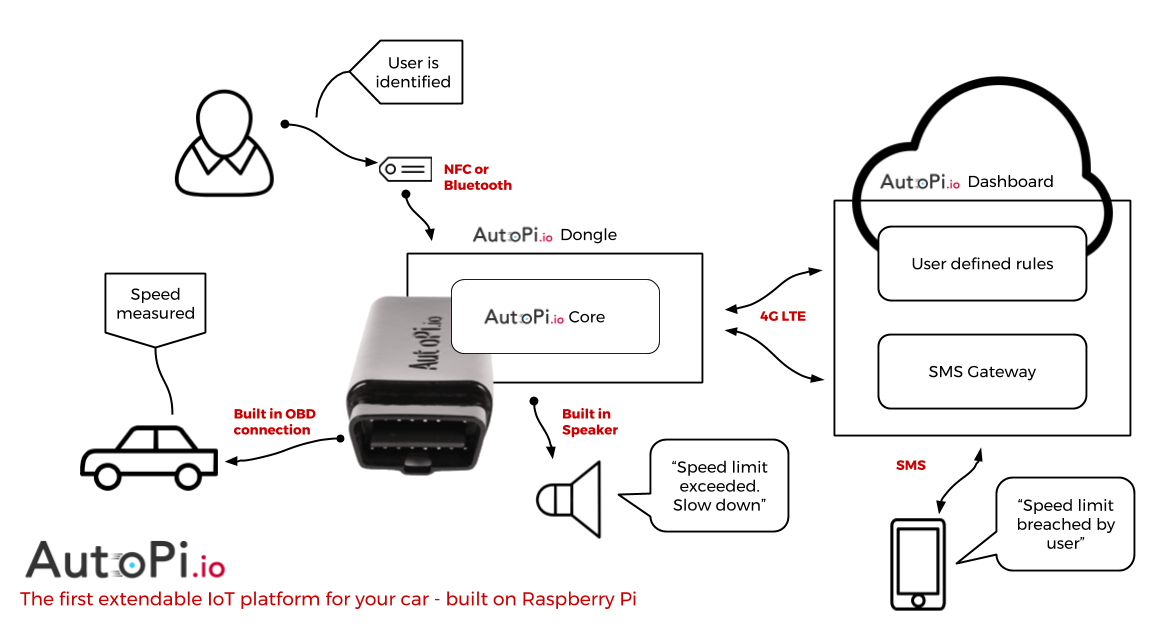
Beyond access, the telematics unit can report vehicle status, diagnostics, odometer and event data.
This is useful for billing, maintenance, support and uptime.
When issues are detected early, vehicles can return to service faster and members get a better experience.
Luxury Vehicles in Car Sharing
Luxury vehicles and electric vehicles are becoming more common in car sharing.
They are often used for special occasions, premium bookings or EV-focused mobility programs.
For these vehicles, pricing, deposit handling and damage workflows become more important.
For EV fleets, charging must also be managed carefully.
The platform should show battery state of charge clearly and guide users on where and how to charge during longer bookings.
Insurance and Car Sharing: Safeguarding Interests
Insurance must be clear before the user starts the trip.
Many providers bundle liability and physical damage coverage into the trip price.
Others offer optional deductible reduction.
The important part is transparency.
Users should know what is covered, what is not covered and what happens if there is damage.
Photos, timestamps, location and tamper-resistant logs can reduce disputes and make claims easier to handle.
KPIs and Unit Economics
Car sharing operators need to track a small set of useful metrics.
These metrics help decide where vehicles should be placed, how pricing should change and where field service is needed.
Important KPIs include utilization, revenue per available vehicle hour, cleaning cycle time, incident rate and payment approval rate.
| KPI | Definition | Healthy range |
|---|---|---|
| Utilization | Booked time divided by available time. | 25–40% weekday peak in urban zones. |
| RevPAH | Revenue per available vehicle hour. | $3.50–$6.00 depending on vehicle mix. |
| Cleaning cycle | Average hours between service tasks. | 24–72 hours based on demand. |
| Incident rate | Damage or tow events per 100 trips. | < 1.2 per 100 trips. |
ROI Mini Calculator
A simple ROI model can help before scaling a car sharing project.
The example below shows how a compact urban launch can be evaluated.
Replace the numbers with your own assumptions for vehicles, hardware cost, monthly software, utilization and revenue.
| Input | Value | Comment |
|---|---|---|
| Vehicles | 50 | Initial free-floating zone. |
| Capex per vehicle | $1,500 | Telematics, locks and installation. |
| Monthly platform + connectivity | $18 | Per vehicle. |
| RevPAH | $4.20 | At 30% utilization. |
| Gross monthly revenue | $151,200 | 50 vehicles × 24h × 30d × RevPAH. |
Car Sharing Globally: A Broadening Horizon
Car sharing is growing as cities look for better ways to use vehicles, parking and mobility infrastructure.
Operators are adding electric vehicles, working with property owners and using dedicated parking to improve access.
With clear policy, reliable telematics and strong field operations, car sharing can become a useful part of the mobility mix.
The model is strongest when the user experience is simple and the operations behind it are controlled.
That means reliable access, accurate billing, good vehicle availability, fast issue handling and data that helps the operator improve over time.

